Screw, vane or piston compressor: which is right for you?
Piston, rotary screw and rotary vane compressors all deliver air at pressure. How they do it affects how long they can run, how much noise they make, what they cost to run and how they are maintained. This guide compares them in plain terms and ends with a simple table to help you choose.
How each type works
Piston compressors
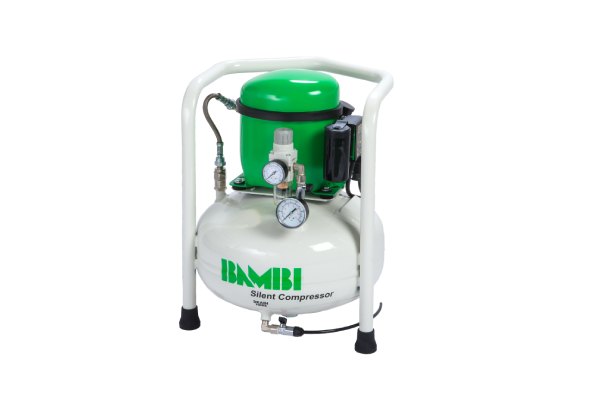
A piston (or reciprocating) compressor works like a car engine in reverse. A crankshaft drives a piston up and down, drawing air in on the down stroke and pushing it out through a valve on the up stroke. Two stage machines compress, cool, then compress again, which suits higher pressures and heavier use.
Output comes in pulses, so piston compressors are normally mounted on or paired with an air receiver.
Rotary screw compressors
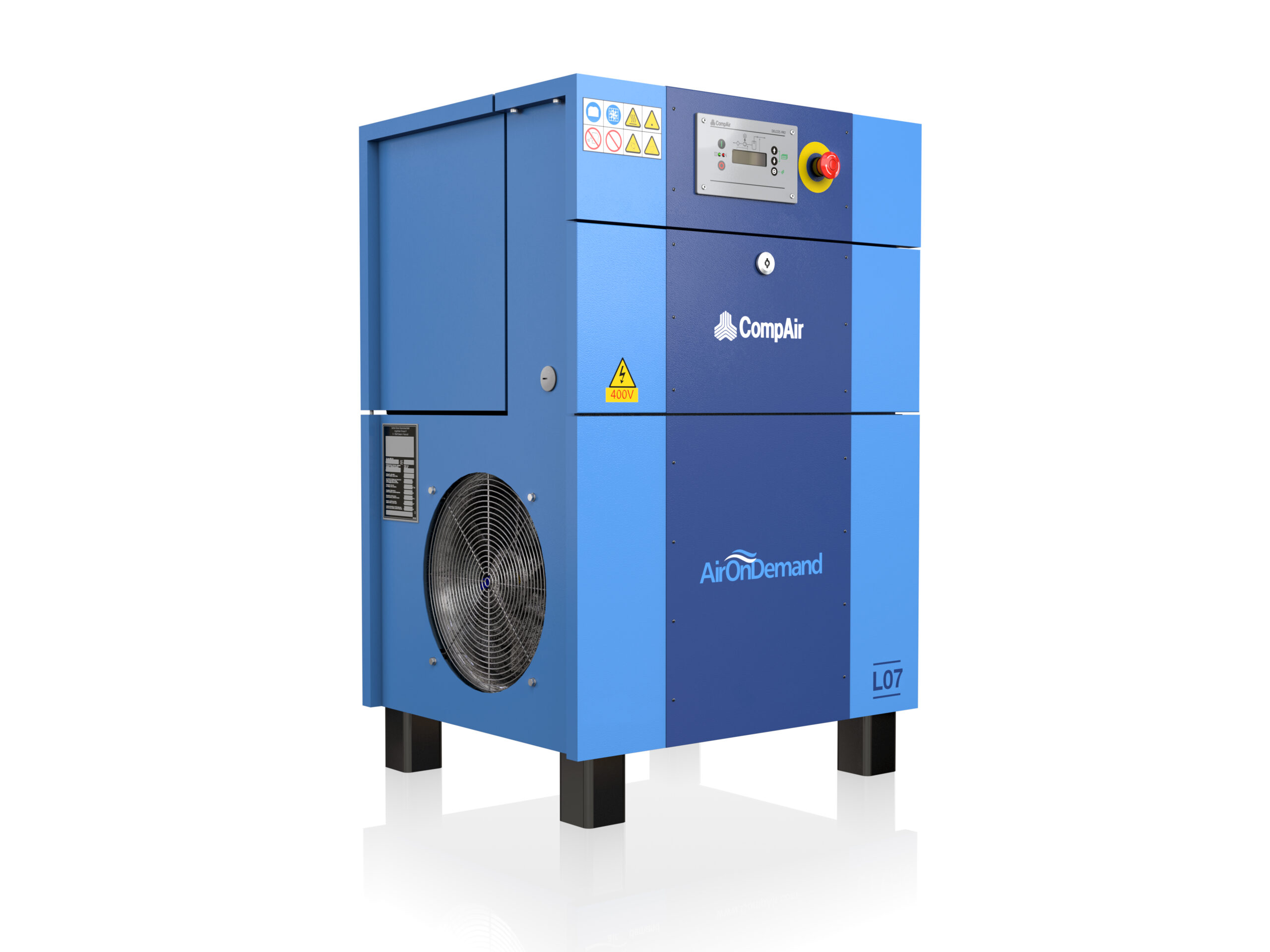
A screw compressor uses two meshing helical rotors. As they turn, air is trapped between the lobes and squeezed into a smaller and smaller space as it moves along the rotors. In oil injected machines, oil seals the gaps, cools the air and lubricates the bearings, and is then separated out before the air leaves. The output is smooth and continuous.
Rotary vane compressors
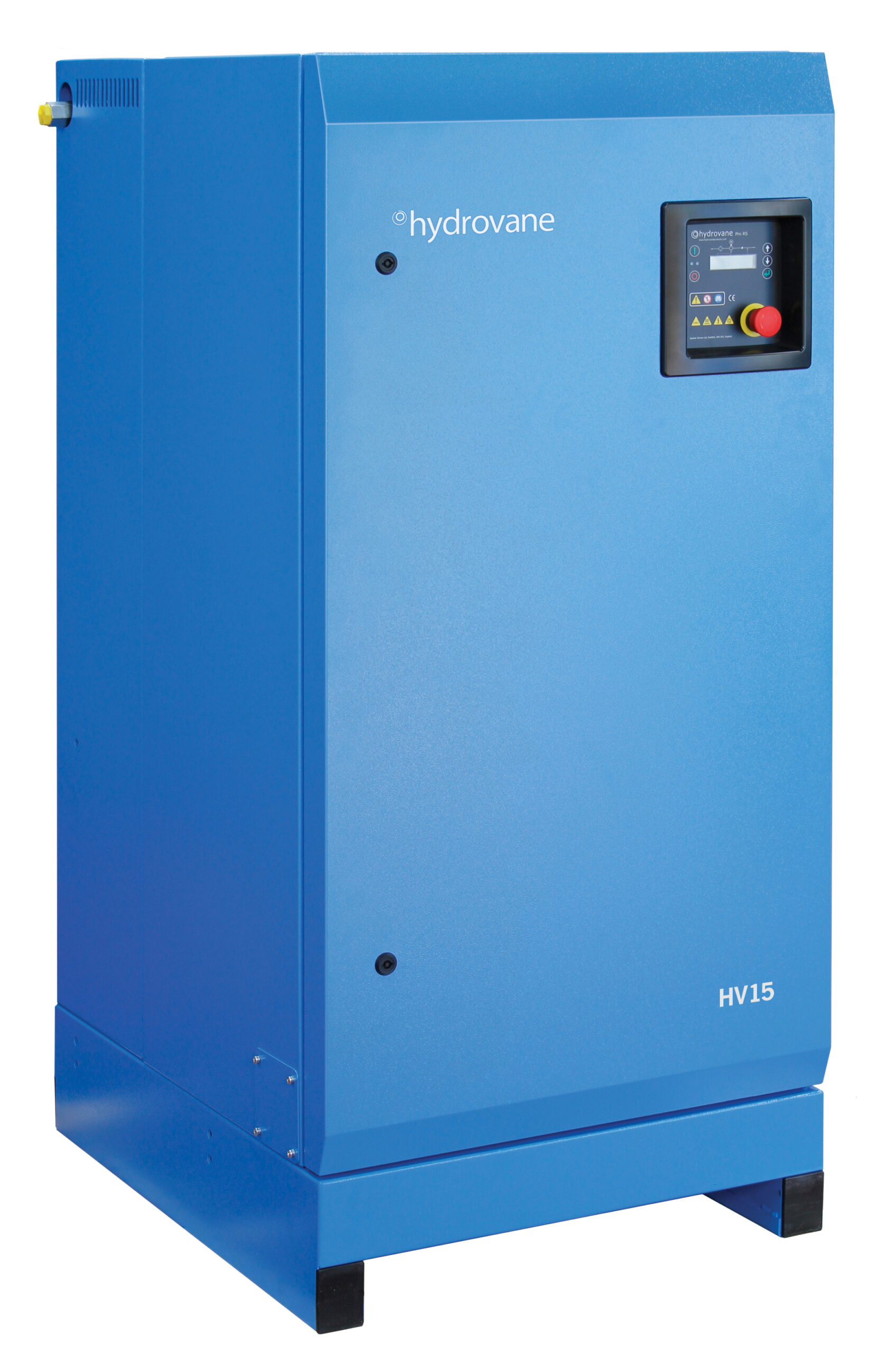
A vane compressor has a single slotted rotor mounted off centre in a cylindrical housing. Vanes slide out as the rotor turns, trapping pockets of air that shrink as they travel round. Oil seals and cools the compression element. Hydrovane rotary vane compressors are the best known example in the UK, and run direct drive at a low speed of around 1,450 rpm with no belts or gears.
Duty cycle
Duty cycle is the share of time a compressor can run without stopping to cool. It is the single most important difference between the types.
- Piston: most are designed to run, rest and run again. Check the manufacturer’s stated duty cycle. Running one flat out all day leads to overheating, oil carryover and early wear.
- Screw: built to run continuously. A screw compressor that only runs in short bursts may never get its oil fully up to temperature, which lets moisture build up in the oil.
- Vane: also built for continuous running, and well suited to steady demand in workshops and small to medium factories.
Noise
Open piston compressors are generally the loudest and often end up in a separate room. Enclosed silent piston units are much quieter. Bambi, for example, specialises in quiet piston compressors, including oil free models, for laboratories, dental surgeries and offices. Our silent and low noise air compressors page compares the quietest machines we supply by noise level.
Screw and vane compressors usually come in acoustic enclosures and can often sit inside the workshop. The slow running speed of a vane compressor helps keep it quiet.
Typical size ranges
- Piston: from small portable units up to the low tens of kilowatts. Most common in garages, small workshops and as backup machines.
- Screw: from a few kilowatts up to several hundred, so they cover everything from a small factory to a large manufacturing site.
- Vane: small and medium sizes. The Hydrovane HV range runs up to 45 kW.
Manufacturers such as Champion offer both piston and screw ranges, and CompAir covers rotary screw machines from small workshop units to large factory installations, so you can stay with one brand as your needs grow.
Efficiency
Rotary screw and vane machines are the natural choice for steady, larger demand, but in practice efficiency depends more on how well the compressor matches your demand than on its type.
A fixed speed screw compressor running off load for long periods still draws a good deal of power while producing no air. A piston compressor that starts and stops to feed a few tools can be perfectly economical. Leaks, pressure set higher than needed and poorly sized pipework waste more energy than most people realise, whatever the compressor.
Variable speed
Variable speed compressors use an inverter to slow the motor when demand drops, producing only the air you use. They help most where demand rises and falls through the day. If your compressor already runs fully loaded all day, the gain is small. Variable speed models are available in both screw and vane ranges, including Hydrovane’s Regulated Speed models.
Oil lubricated or oil free
Most industrial compressors are oil lubricated. A small amount of oil carries over into the air and is removed by filtration. For general engineering and workshop use this works well.
Oil free compressors have no oil in the compression chamber. They are the usual choice where even a trace of oil is unacceptable: food and drink, pharmaceuticals, laboratories, dental work and electronics. Oil free piston models suit small demands and oil free screws cover larger ones. The air still needs drying and filtering, because intake air carries its own contamination.
Maintenance and lifespan
Piston compressors are mechanically simple. Valves, piston rings, belts and oil need regular attention, and wear comes faster if the machine is worked beyond its duty cycle.
Screw compressors need oil, oil filters, air filters and separator elements changing at set running hours. Well maintained, they last a long time, though the airend eventually needs overhauling.
Vane compressors have few moving parts and no belts or gearbox to wear. Routine work is oil, filters and separator, much like a screw machine.
For all three, lifespan depends more on correct sizing, a clean, cool, well ventilated room and regular servicing than on the type itself.
Which one should you choose?
| Type | Choose this if | Think twice if |
|---|---|---|
| Piston, oil lubricated | Your demand is small and intermittent, such as a garage, farm or small workshop, and you want a low purchase price | You need air most of the day or noise is a concern |
| Silent piston, oil free | You need small amounts of clean air in a quiet setting such as a laboratory, surgery or office | You have a large or continuous demand |
| Rotary vane | You have steady demand in a workshop or small to medium factory and want a quiet machine with simple maintenance | You need very large flows |
| Rotary screw, fixed speed | Your demand is steady and high for most of the working day | Demand is light or very variable, leaving the machine off load for long periods |
| Screw or vane, variable speed | Your demand rises and falls through the day and you want to cut energy use | Your compressor already runs fully loaded all the time |
Browse our full range of air compressors.
Frequently asked questions
Is a screw compressor always better than a piston compressor?
No. A screw compressor is the better tool for continuous demand, but for light, occasional use a piston compressor is simpler and cheaper, and a screw machine that rarely runs long enough to warm up can suffer for it.
Rotary vane vs screw: which is better?
Both are rotary, oil injected and built for continuous duty. Vane machines are popular in workshops and smaller factories for their quiet, slow running, direct drive design. Screw compressors cover a much wider size range. Compare models on delivered air, power and service costs, not technology alone.
What size compressor do I need?
Start with the air consumption of your tools and machines, how often each is used and the pressure they need. On an existing site, logging the current compressor over a typical week is most reliable.
Can I put a screw or vane compressor inside my workshop?
Usually, yes, as most come in acoustic enclosures. They do need good ventilation to carry the heat away, and enough space around them for servicing.
J&J Air Systems has supplied and serviced compressors from High Wycombe since 1963. We are an authorised CompAir and Gardner Denver distributor, ISO 9001 and ISO 14001 certified and BCAS members, and we sell and service Hydrovane, Champion, Bambi, ABAC and Parker equipment across London and the Home Counties. Weighing up screw, vane or piston? Get in touch and our engineers will help you choose.
Not sure which compressor suits your site?
Tell us what you run, how many hours a day and the pressure you need, and our engineers will recommend the right machine. Call 0800 027 8442 or send us your details.