

Compressed Air Treatment
Air Treatment
Water in your air lines, oil contamination, condensate disposal. These are some of the most common problems we help customers solve. If you’re running a compressed air system, the compressor itself is only the starting point. Compressed air dryers and filters are a key consideration!
Once air has been compressed, contaminants including water, oil and particulate matter remain present. Left untreated, these can damage downstream equipment, compromise production quality, and put you in breach of ISO 8573-1, the international standard for compressed air purity. Getting your treatment right isn’t optional; it’s fundamental to a system that performs and protects your operation.
Filtration
Air leaving a compressor carries moisture and oil carryover. Filtration removes these before they reach your equipment or process.
The right filtration depends on your application:
- Intake filters remove over 80% of particulate contaminants down to 0.3 micron
- Particulate filters strip out dust and solid particles from the airstream
- Coalescing filters capture oil and water aerosols, dust and dirt down to 0.01 micron
- Activated carbon filters eliminate odours and hydrocarbon vapours
- Bacteria filters are specified where hygiene standards demand it
Filtration is especially critical in food and beverage, pharmaceutical, and medical applications, where air quality directly affects product safety and compliance.
Dryers
Excess moisture, whether liquid or vapour, causes corrosion, freezes outdoor pipework, promotes bacterial growth, and shortens the life of your equipment. A dryer is the right solution, and we offer three types depending on your dew point requirements and application.
Add a short title
Refrigerant Dryers
Pass air through a heat exchanger, cooling it to precipitate moisture, which is then drained away. Air is dried to a pressure dew point of +3°C, suitable for most general industrial applications.

Add a short title
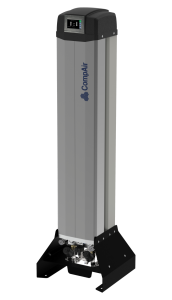
Desiccant dryers
Push compressed air through a desiccant-filled chamber that adsorbs moisture directly, achieving dew points as low as -70°C. The right choice where low dew points are critical or pipework runs in cold environments.
Add a short title
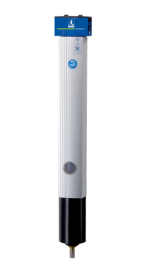
Membrane dryers
Use a permeable membrane to separate water vapour from the airstream, with a small purge flow carrying moisture away. Compact, quiet and with no moving parts, well suited to point-of-use applications.
Condensate Management
Compressed air condensate typically contains around 1% oil, which classifies it as a pollutant under the Water Industry Act 1991 and Environmental Protection Regulations 1991. Disposing of untreated condensate to drain is illegal, and the responsibility sits with you as the operator.
We can supply and install equipment to remove condensate from your system and treat it on-site.
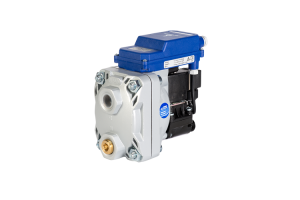
Zero Loss Drain
Use electronic level control to discharge condensate only when required, with no wasteful bleed of compressed air. They reduce energy consumption and ensure consistent drainage across your system.
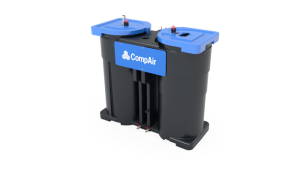
Oil-water Separator
Treat condensate so that the water fraction, roughly 99% of the total volume, can be legally discharged to drain. The separated oil is collected for proper disposal, significantly reducing your waste contractor costs.
If you’re unsure what treatment your system needs, we’re happy to assess your setup and make a recommendation.
Call: 0800 027 8442 | Email: [email protected]