

Energy Reduction
Most compressed air systems are wasting 20-30% of their energy output
Compressed air accounts for 10 to 30% of industrial electricity consumption in a typical manufacturing facility. In most facilities, a significant proportion of that is being wasted. Air leaks, compressors running unloaded, working pressure set higher than necessary, no heat recovery: these are common, fixable problems that show up on your energy bill every month.
J&J Air Systems carry out compressed air energy audits and advise on practical improvements with clear payback periods. We identify where the waste is and give you the options to address it. We are not trying to sell you a new compressor. However, sometimes that is the right answer, and we will say so if it is.
30%
Of electricity bills in manufacturing
Compressed air is typically one of the largest single energy costs on site.
20-30%
Typically lost to leaks
In systems with no active leak detection programme. Most leaks are inaudible without specialist equipment.
20-50%
Energy reduction with VSD
Variable speed drive vs fixed-speed compressor of equivalent capacity, in real-world variable demand conditions.
94%
Of electrical input converted to heat
Almost all of it recoverable for space heating or process use — currently being vented to atmosphere on most sites.
Compressed air audits and leak detection
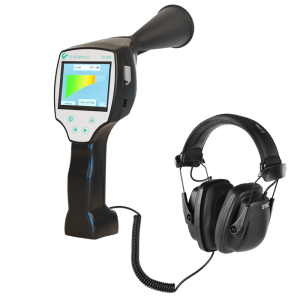
We use data logging and ultrasonic detection equipment to measure your system properly. A week of data logging will typically reveal more about your compressed air system’s actual performance than years of operator observation. We look at:
- Air leaks across the distribution system, located, mapped and costed individually
- Actual consumption versus compressor output to establish true system efficiency
- Whether working pressure is set higher than your applications actually require
- Compressor utilisation — identifying fixed-speed machines running at partial load for most of the day
- Periods of high unloaded running where energy is consumed but no useful air is produced
- Pressure drop across the distribution system, filters and treatment equipment
You receive a written report with findings prioritised by estimated energy waste, recommended actions and a projected saving for each. The report gives you the information to make decisions about what to fix and in what order. Furthermore, there is no obligation to use us for the remedial work.
Pressure optimisation
Every 1 bar reduction in system pressure reduces compressor energy consumption by approximately 7%. Many systems are set at a higher pressure than the applications connected to them actually require. This is often because the pressure was set years ago to accommodate a machine that has since been removed or replaced. Or it can be simply because no one has reviewed it.
We assess what your processes actually need, identify the highest-pressure demand on the system, and advise on whether working pressure can be reduced. On systems with a mix of high and low-pressure demands, we can also advise on whether a secondary low-pressure circuit would allow the main system to run at a lower pressure. In many cases, this often delivers significant savings for minimal capital outlay.
Variable speed drive compressors
A fixed-speed compressor runs at full speed regardless of demand, venting energy when air is not needed. A variable speed drive (VSD) compressor adjusts its motor speed to match actual demand, producing only what is required at any moment. In applications with variable demand – which describes most real-world operations – a VSD typically reduces energy consumption by 20 to 50% compared to a fixed-speed machine of equivalent capacity.
We can model the payback for your specific usage profile before you commit to anything. In many cases a VSD compressor pays back within two to four years through energy savings alone. Additionally, you get the benefit of reduced wear and longer service intervals compared to a machine that cycles on and off repeatedly under fixed-speed control.
Heat recovery
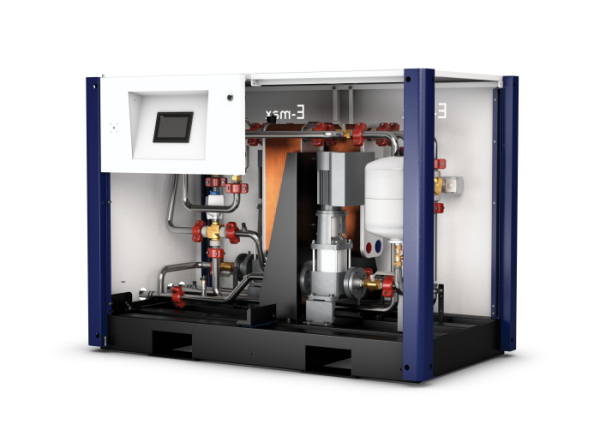
Up to 94% of the electrical energy input to an air compressor is converted to heat. On most sites this is wasted – removed by the cooling system and vented to atmosphere. Heat recovery systems capture this energy and redirect it for space heating, process water heating or other thermal applications. As a result, you can directly offset gas or electric heating costs.
Heat recovery can be retrofitted to most rotary screw compressors without major modification. Payback periods vary depending on the size of the compressor and local energy costs, but are typically between one and three years. For sites with high heating demands running alongside significant compressor capacity, the savings can be substantial.
Ongoing flow monitoring
A one-off audit gives you a snapshot. Permanent or semi-permanent flow monitoring gives you continuous visibility of your compressed air consumption. This allows you to spot developing problems early, track the impact of improvements over time, and provide the consumption data needed for ISO 50001 energy management or carbon reporting purposes.
We supply and install compressed air flow meters and monitoring systems, from simple in-line meters to multi-point monitoring with remote data access. We can advise on the right level of instrumentation for your site.
Where to start
Tell us your compressor make, model and approximate running hours per day, and your electricity rate per kWh. We can give you a rough indication of whether there is a material saving available before committing to a formal audit. For most sites running a compressor of 11kW or above for more than a few hours a day, there is almost always something worth looking at.
Call: 0800 027 8442 | Email: [email protected]