Case Study: The importance of good ductwork.
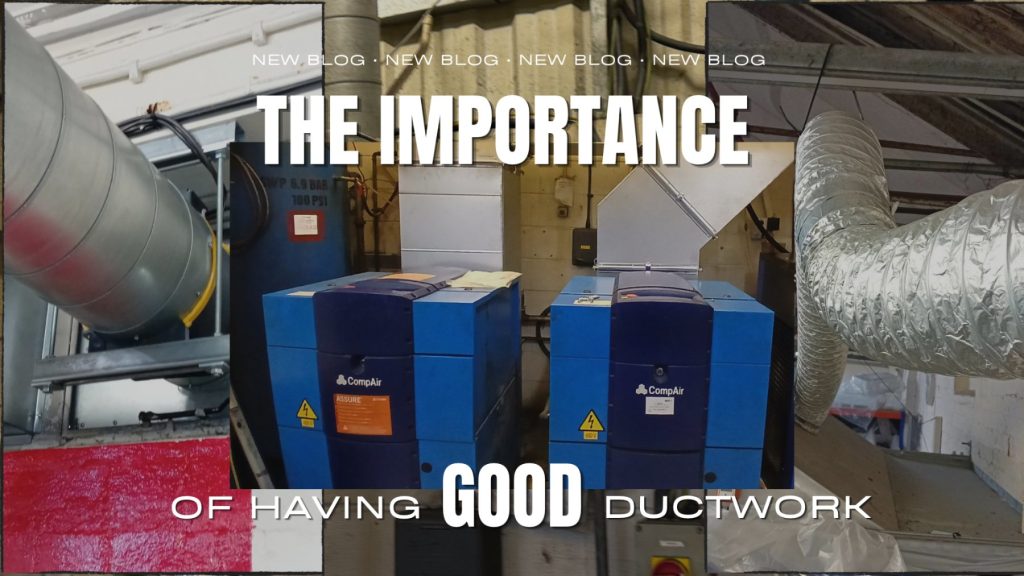
If you have a compressor, ductwork can be an essential part of your set-up. However, without engineering knowledge it can be easy to overlook the real importance of good ductwork.
Afterall, they are just pipes right?
Well, yes and no.
They are pipes, and their function is pretty simple. However, get the set-up wrong, and you are risking not only inefficiency, but also costly repairs and even a dangerous compressed air system.
But let us explain more through a recent case at J&J.
J&J’S DUCTWORK CASE STUDY:
Not all design is created equal, and this could not be more evident that in our most recent case study.
Steve Jobs said it best when he said “the design is not just what it looks like and feels like. The design is how it works”. And this reflects brilliantly in our case study below.
Whilst our comparison photos below may just seem like a cleaner and sleeker aesthetic choice, this is only half the story.


The ductwork in the before photo was installed by another compressor company. Incredibly, the clients were told that this set up was not only adequate, but also professional.
However, with over 63+ years in the compressor game, at J&J we can tell you that this is far from the truth.
As should be visible from the photos, the ductwork here was hugely undersized, loose, poorly supported and floppy. When flexible ductwork is saggy, this then restricts system airflow. And from an insider, trust us when we say that restricted system airflows is one of the leading causes of premature compressor failure in compressor systems.
So out with the old and in with the new!
J&J came in and revamped this client’s previous inefficient and dangerous ductwork quickly with a supported system that works correctly 100% of the time.
But with this quick overview, this then leaves the question – why exactly is ductwork so important for your business?
Well let’s get into the nitty gritty…
WHY GOOD DUCTWORK IS IMPORTANT
Good ductwork and ventilation are absolutely critical in your compressed air set up for 3 very important reasons.
Heat:
As you know, compressors generate massive amounts of heat during their use.
In fact, 80% to 90% of electrical energy used by your compressors converts into heat. And without any kind of exhaust ductwork to channel this swelter outside, the compressor room itself traps this excessive thermal energy.
If this extremely high ambient room temperature remains unmoved and stuck, this can then trigger high-temperature alarms, automatic shutdown and can even cause severe thermal stress of internal components like bearings, lubricants and seals.
And this all can of course only lead to excessive wear and tear.
And as business owners this phrase means only one thing…more money leaving your pocket in the long run!
Efficiency:
But it doesn’t stop there.
When a compressor is forced to run in an overly hot environment, its volumetric efficiency drops, forcing the motor to consume more energy to deliver the required pressure output.
And if you feel like your left palm is itching, you would be correct to believe that yet more money will be leaving your wallet if this remains unfixed.

Purity:
And lastly, if you have inefficient ductwork your air is simply not being properly cleaned.
Not only will high temperatures reduce the effectiveness of downstream air dryers, meaning unwanted moisture gets into your tools and industrial processes, but without proper ventilation your compressor room is left recirculating hot, dusty and debris-filled air that will eventually clog filters.
Not only is this unpleasant to work in and costly for machinery, but can also affect the purity of your final product.
So all in all, something as simple as not having proper ductwork can really have some pretty serious and miserable knock on effects for you and your compressor.

SIGNS YOUR DUCTWORK NEEDS LOOKING AT:
And so with all of this newfound information, if you are now giving your current ductwork the side eye, but are not sure how it’s fairing, here are some common warning signs that your system is struggling.
If your ductwork has been poorly installed, or just has a bad starting setup, here are common symptoms to look out for:
- Your compressor gets too hot on a regular basis (even in cooler, ambient temperatures).
- Your dryer is passing a higher level of moisture through to the end process consistently.
- Ambient air in your compressors room is measuring above 35-40c.
- Your monthly energy bills are spiking without extra use. In fact, leaky ducts can waste up to 30% of conditioned air.

HOW TO FIX A BAD DUCTWORK SYSTEM:
So how do you solve a problem like Maria?
- Support:
At J&J we like to say that every piece of ductwork needs good support, like a bra. If your ductwork is flexible we suggest placing wide hanging straps (at least 1.5 inches wide) at least every 4 feet to prevent sagging or flopping, like in our before photo.
Ideally, we would suggest encasing your ductwork in stiff metal shells, like our after photo, for your best case scenario for best case results.
- No sharp bends
For every sharp bend, airflow will be reduced considerably as all gas will need to work much harder to continue moving. For this reason, if you have flexible pipes we would suggest pulling these taut, avoiding excessively long, and looping or kinked flex ducts.
- Get a revamp
And if your ductwork really cannot be helped with increased support and adjustment of your pipes, we would recommend a complete redo.
Whilst the cost and downtime is undoubtedly annoying, this is peanuts compared to what you will eventually need when your compressor fails due to inefficient ductwork throughout the years.
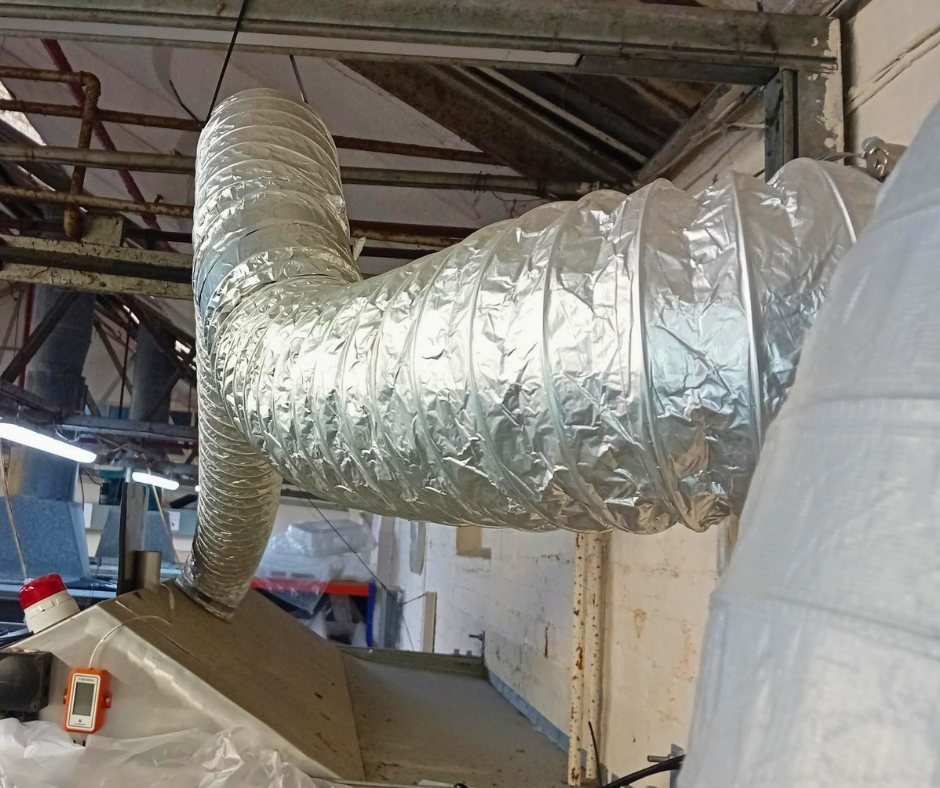
So in the case of our example ductwork, it truly was time to say bye bye basic, and hello efficiency!
But this case really isn’t as doom and gloom as it may seem.
Installing proper ductwork on your initial installation, or replacing current inadequate ductwork, is probably not as expensive or as time consuming as you might think.
In fact, to speak to a member of our expert team about how we can help improve your ventilation, reduce your running costs, and extend your compressors lifespan today then give us a call on 0800 0278 442 or send us an email to [email protected].
We can’t wait to hear from you.
J&J – When the pressure is on, we deliver.
Keep reading
- Compressed air leak detection: how to find the leaks that typically waste 20 to 30% of your compressor output.
- Is your compressor costing you more than it should?: five ways to cut the energy your compressed air system uses.
- Buy cheap, buy twice: why proper installation matters, with a real installation case study.
- So you need a compressor, now what?: our step by step guide to buying, from working out what you need through to installation and aftercare.